The part nobody talks about
I’m Dustin — I build 9x12 Tools, and I run community card campaigns myself. I’ve been inside this community long enough to know what operators talk about: the pitch, the close, objection handling. The stuff that gets celebrated.
Nobody talks about the two hours you spent before that call just trying to find the business, dig up a phone number, locate an email, and add it to a spreadsheet you’ll lose track of by next week.
That’s worth saying out loud because it’s the same category of problem as the one we got wrong for two years. The celebrated part of this business is the conversation. The part that actually decides whether you fill a card is the unglamorous machinery on either side of it: building the list before the call, and collecting the money after it.
What the Prospecting Grind Actually Looks Like
Here’s a typical Tuesday morning for an operator prepping a new card:
- Open Google Maps. Search “restaurants near 75201.”
- Click on the first result. Copy the name. Navigate to their website. Hunt for an email. No email. Check the contact page. Just a form. Back to Maps.
- Repeat 40 times.
- Three hours later, you have 25 names in a spreadsheet, 8 phone numbers, and maybe 4 email addresses.
- You don’t remember which ones you already called on your last drop.
That’s not a sales workflow. That’s manual labor disguised as a business. I built SpotLeads to replace it.
What SpotLeads Does
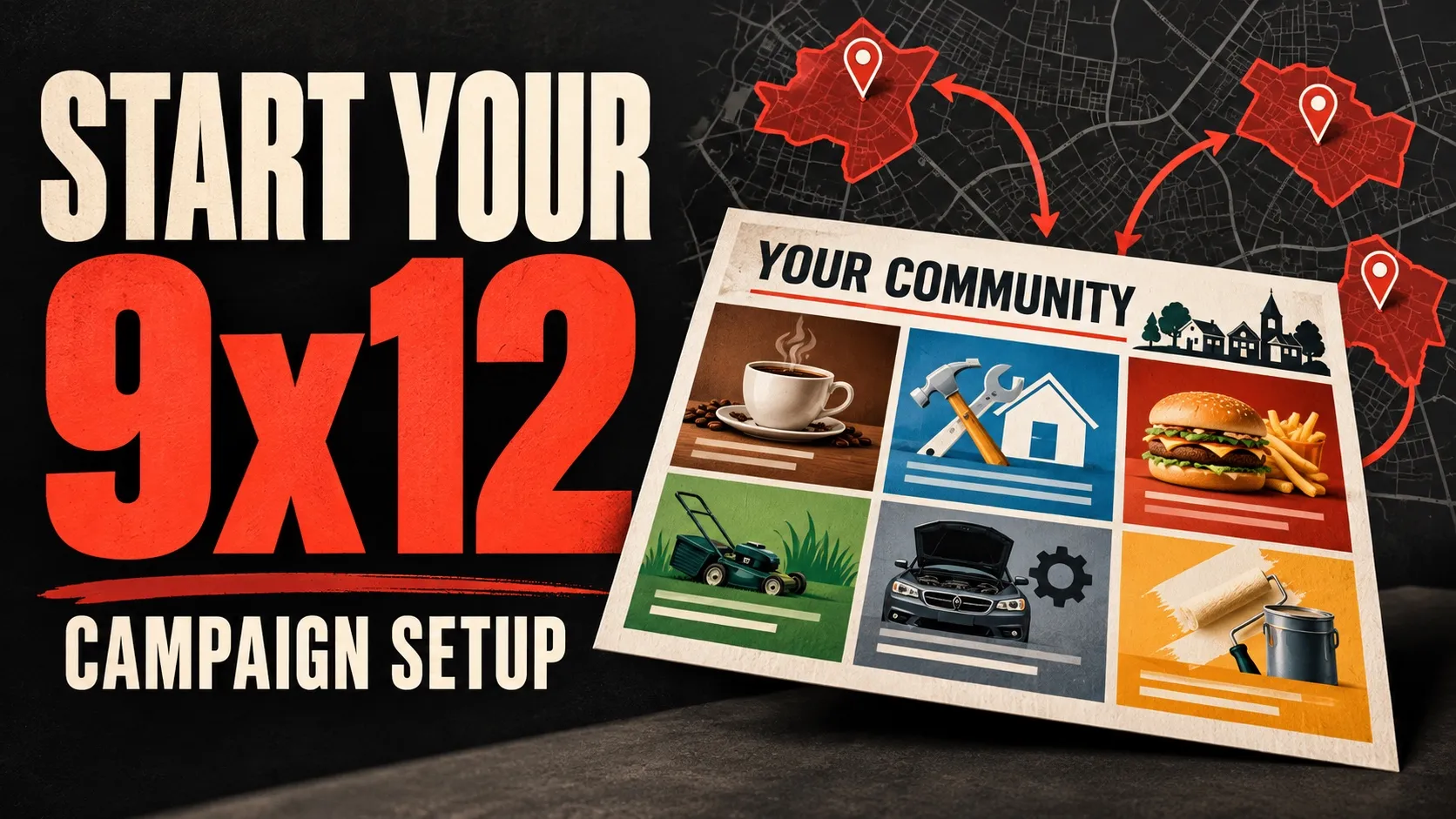
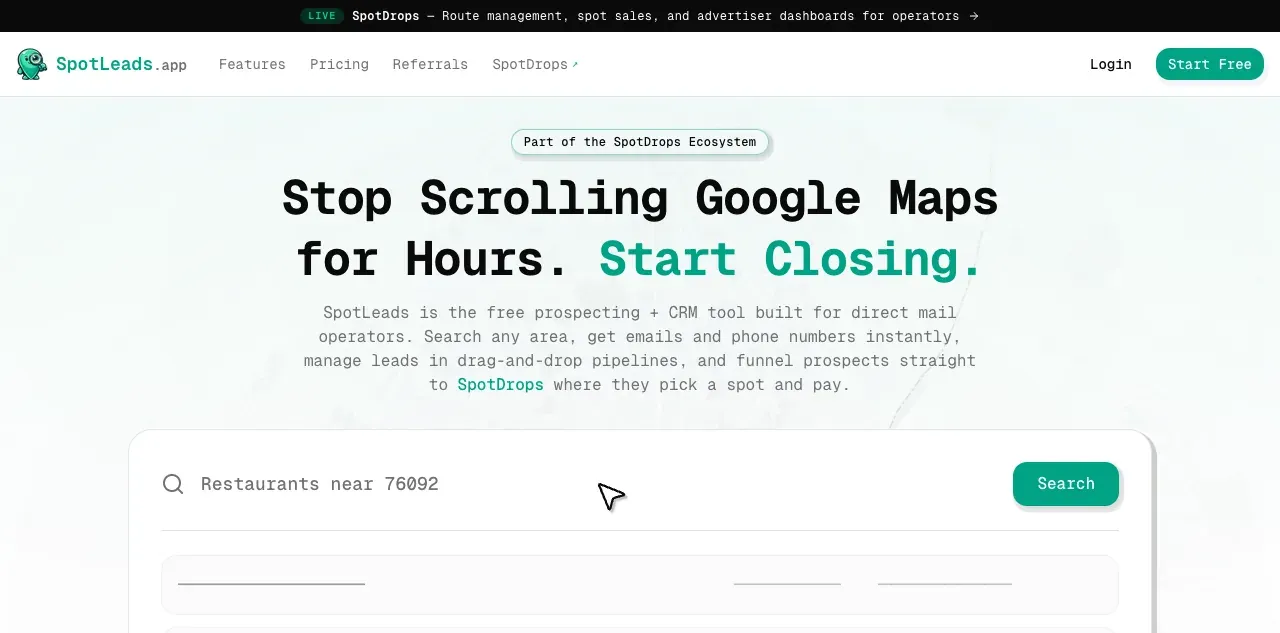
SpotLeads is a free prospecting and CRM tool built specifically for direct mail operators. Not generic “small business owners.” Not freelancers. Drop operators running 9x12 and EDDM cards.
Search by Category + ZIP
Pick a business category — restaurants, HVAC, dentists, whatever you’re targeting — and drop in a location. SpotLeads pulls up to 60 results instantly on the paid plan, 10 on free. Names, addresses, phone numbers, and websites. All in one list, no copy-pasting from Maps.
Email Enrichment Happens Automatically
SpotLeads crawls every website it finds and pulls emails — multiple per lead when available. It also surfaces Facebook, Instagram, LinkedIn, and other social profiles. You’re not doing this manually. It happens when you save a lead.
Finding one email manually takes 3-5 minutes of clicking around. SpotLeads does it in seconds for every business on your list.
A CRM Built for Drop Operators
SpotLeads isn’t just a lead finder — it includes a full CRM with drag-and-drop Kanban pipelines. Set up stages (New -> Called -> Interested -> Closed -> Declined) and drag leads through as you work them. Log calls. Write notes. Set reminders. Generate AI-written outreach messages personalized to each business. See every interaction in a timeline so you never wonder “wait, did I already call these guys?”
For context: Pipedrive charges $14/seat/month for this kind of CRM. SpotLeads includes it free.
Where it sits in the workflow
Find businesses in SpotLeads, work them through the pipeline, and when one says yes, take the money before the call ends.
I want to be careful about how I describe that last step, because I used to describe it wrong. The old version of this paragraph said your campaign website is “how you close them.” It isn’t. You close them — on the third or fourth follow-up, usually by phone. What the page needs to do is be there at the moment of yes, showing the square they’re buying at the price on the card, ready to take a payment.
SpotLeads is how you find them. The follow-up is how you close them. The checkout is how the yes stops being a maybe again.
What It Costs
The free plan is real: unlimited searches, up to 10 results per search, email enrichment, pipelines, lead pages, and CSV export. There’s a 25 save/month cap, but you can earn more by referring other operators.
The Operator plan is $27/month and bumps you to 60 results per search, unlimited saves, AI message generation, lead reminders, and a business card scanner. Annual billing saves $54.
Give It a Try
If this tool saves you 3 hours of Google Maps grinding and hands you a cleaner list with emails already attached, that’s worth something at $0. Check it out at spotleads.app — no credit card needed, you can run your first search in two minutes.
An honest update
This post is from early 2026, and the situation has changed enough that leaving it unamended would be misleading.
9x12 Tools now does the core of this itself. When you save your EDDM routes, it searches the businesses in your mail area across the categories that buy 9x12 spots, dedupes them, scores each one, grades them against each other, scrapes their sites for an email address, and hands you a ranked call queue — automatically, with no form and no button to find. That is most of what this article describes SpotLeads doing, and it happens without leaving the campaign.
So the honest positioning is: if you are running cards on 9x12 Tools, you already have this and you do not need a second tool. SpotLeads remains a good standalone product — it is separate, it has its own billing, and it is genuinely useful if you are prospecting local businesses for something other than a community card, or working markets you do not run campaigns in.
I am leaving the article up rather than deleting it because the description of the problem is still exactly right. It was three hours of Google Maps and a spreadsheet you lose track of. That was worth fixing, and it is now fixed in two places.
Read next
Who Should You Call First? How the Lead List Builds and Ranks Itself
Save your EDDM routes and the businesses in your mail area are already found, scored and ordered. Here is exactly where they come from, what the grade means, and where it should be overruled.
Read the guide